

Replit vs. Lovable: How AI Agents Shape the Future of App Development
Is there a clear winner, loser? Let's discuss.

Well, you could say that I’ve been having a little too much fun experimenting with these new no-code tools. It’s exciting to think that any idea or concept can theoretically be brought to life in minutes or even seconds. However, I do recognize that this freedom can sometimes have drawbacks—but that’s a discussion for another time.
Expanding my projects
While working on my task planner app I decided to start another project. I set out to build an AI agent that generates user personas based on prompting and selectively curated sources. This tool would assist designers like me in crafting robust and research-backed personas with minimal manual effort.
Lovable enters the chat
Lovable had been on my radar for a while, but it truly caught my attention when I watched a livestream featuring its co-founder and chief product officer announcing a partnership with Builder.io. This collaboration enabled designers to seamlessly translate their UI work from Figma into Lovable, making development even more accessible. My initial reaction was a mix of awe and excitement—both at the advancements in no-code technology and at finding a tool that truly aligned with my needs and workflow. That moment convinced me to start building on Lovable and explore its potential firsthand.
I consider myself a loyal person/user, so I wasn’t going to switch without a compelling reason to do so. To make a fair assessment of what tool I was to use for my future projects, I needed to conduct a thorough comparison.
Replit provided the detailed control I needed to refine logic and manage complex workflows. Lovable, on the other hand, made the UI experience smoother and debugging more automated.
Replit
Replit offers a robust set of tools and views all within one dashboard. This means that you can make edits and see real-time changes without switching between tools. This level of control makes debugging and refining workflows significantly easier.
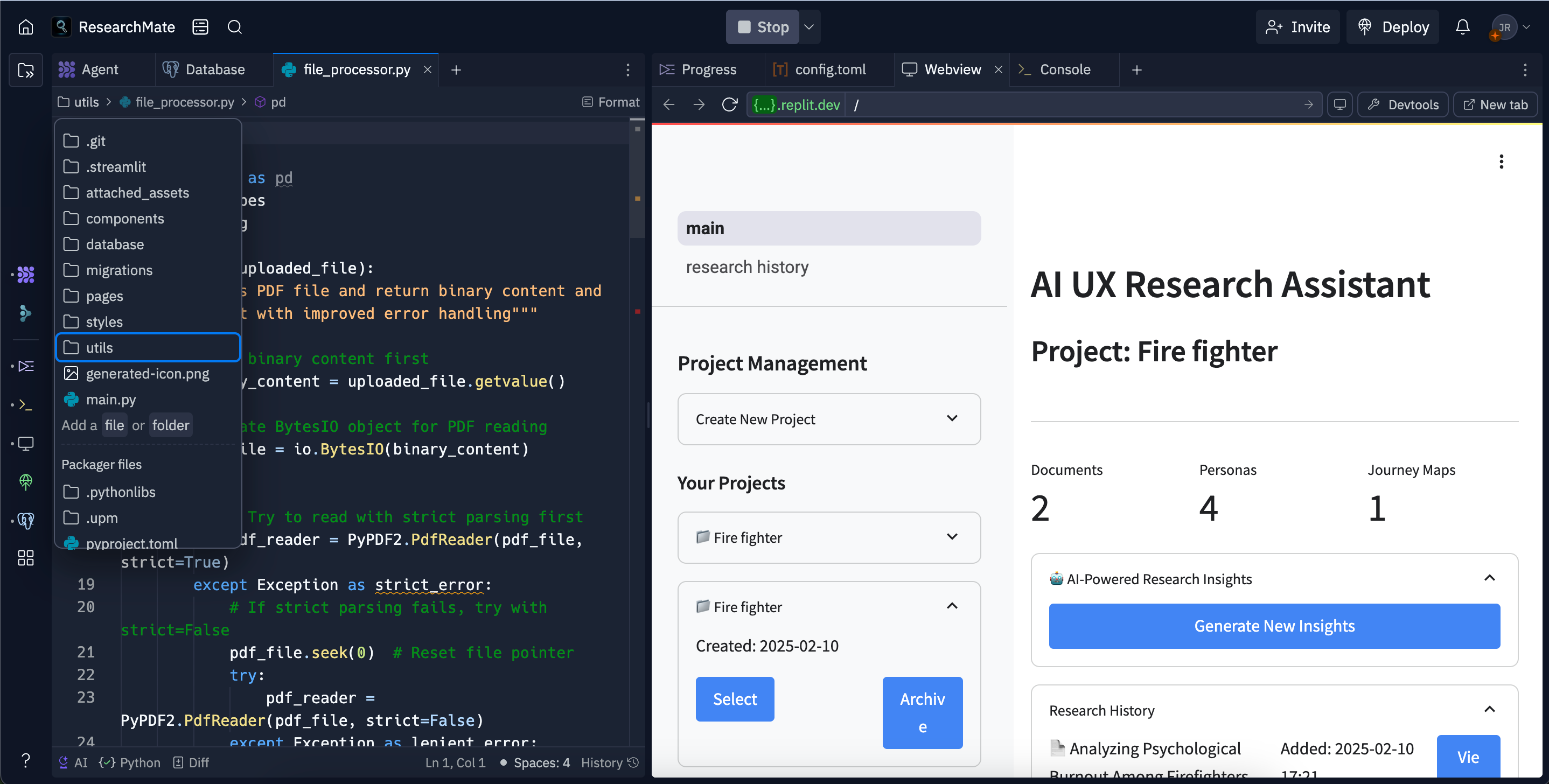
For my project, this meant:
Full access to project files and dashboard. You can import assets, modify structures, and bring in external resources seamlessly. Unlike Lovable, which only provides access to the codebase through GitHub, Replit keeps everything within one interface.
Dual AI support: Agent and Assistant. Replit features an AI agent for building and an assistant for making fine adjustments, which is particularly useful for small refinements and troubleshooting. Lovable only offers a single AI agent with no dedicated assistant.
Feature suggestions and enhancements. Replit's AI actively recommends new features and optimizations, while Lovable is more task-driven and does not offer proactive enhancements.
Lovable
Lovable provides a minimalist, chat-based dashboard that simplifies project management. While it lacks Replit's extensive access to the full project environment, it excels in ease of use and automation.
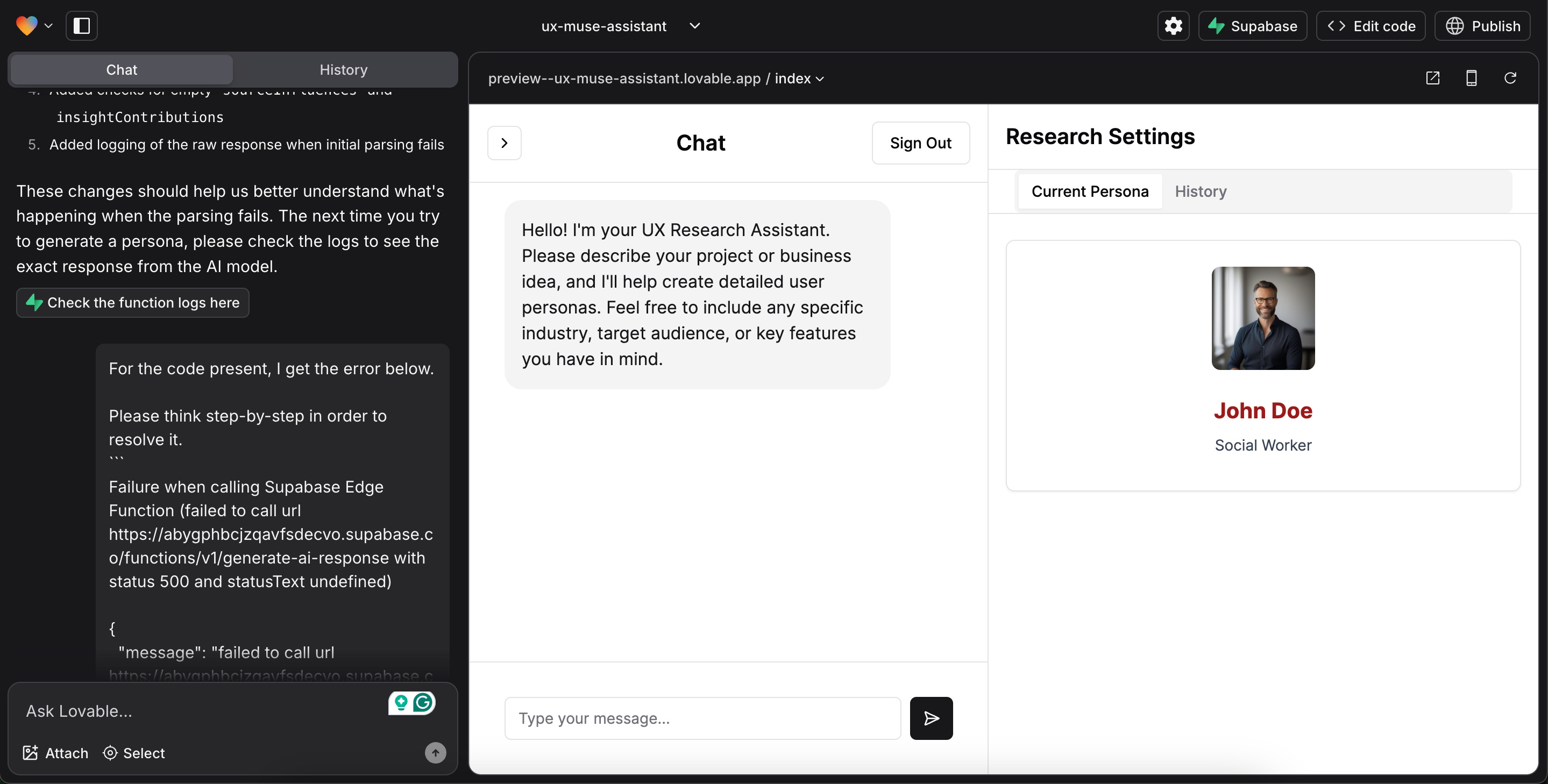
Using Lovable for the same project led to:
Better automated debugging and refactoring. Lovable does a great job at identifying and resolving errors without introducing new ones, making the development process smoother. Additionally Lovable proactively suggests when a file is getting to be too long and needs to be refactored.
Automated chat logging and memory management. Unlike Replit, which requires manual chat resets when the agent's memory runs low, Lovable automatically manages conversations, making ongoing troubleshooting easier.
Better communication of the process. Lovable does a better job at explaining issues or errors and providing clear details on the changes it makes to resolve them. This makes debugging more transparent and easier to follow. In contrast, Replit allows you to see what the agent is thinking, but its responses feel more technical and less conversational, making troubleshooting a bit more complex.
Seamless Figma integration. Lovable’s Builder.io partnership allows designers to convert Figma designs into functional code instantly, a major advantage for UI/UX-driven projects. While Replit doesn’t have a direct Figma integration, I was able to send Figma screenshots to the AI agent, and it did a decent job replicating them.
So Which Tool is Right for You?
Through this experiment, I’ve realized that both Replit and Lovable offer distinct strengths depending on the project’s needs. If you’re looking for deep customization and hands-on coding control, Replit is the better fit.
However, if you prioritize ease of use, automation, and rapid UI development, Lovable shines. Here are the key takeaways between the two for your reference.
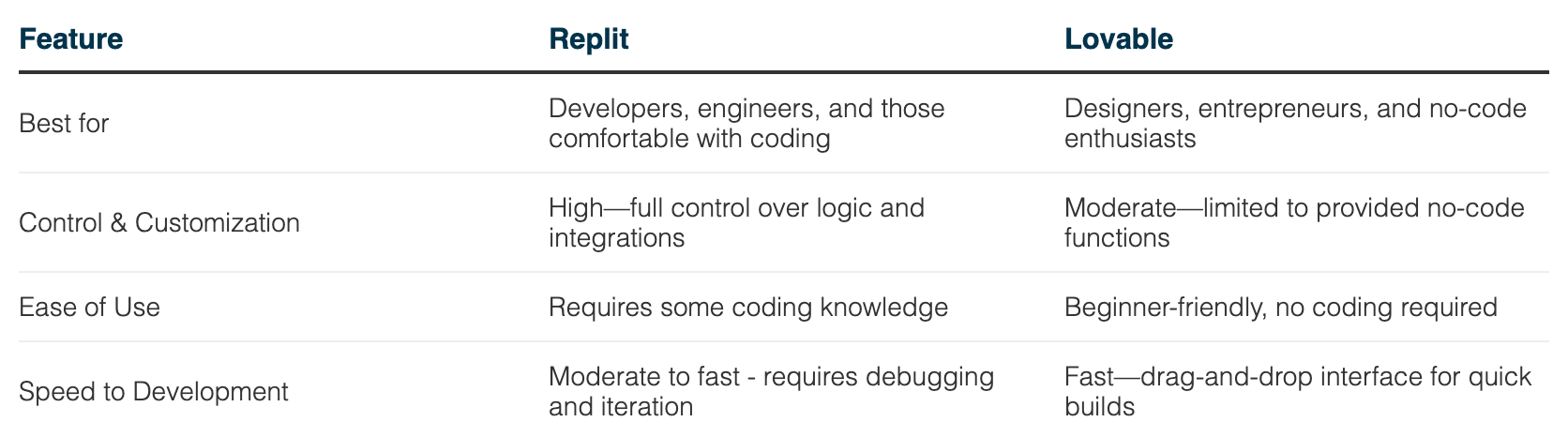
For my AI persona generator, Replit provided the detailed control I needed to refine logic and manage complex workflows. Lovable, on the other hand, made the UI experience smoother and debugging more automated.
Moving forward, I see myself using Replit for larger, more intricate projects and Lovable when I need a quick, no-code solution that integrates well with design tools like Figma. I would love to see Replit incorporate some of Lovable’s features, such as its integration with Figma.
Looking Ahead
The contrast between Replit and Lovable highlights an important shift: AI is making both coding and no-code development more powerful. Whether you’re a developer or a designer, AI-powered agents are changing how we build, automate, and innovate.
I’d love to hear from you—what are your thoughts on AI in development?
Are you using AI-powered no-code tools, or do you prefer working with AI-assisted coding environments?
Let’s discuss! 🚀